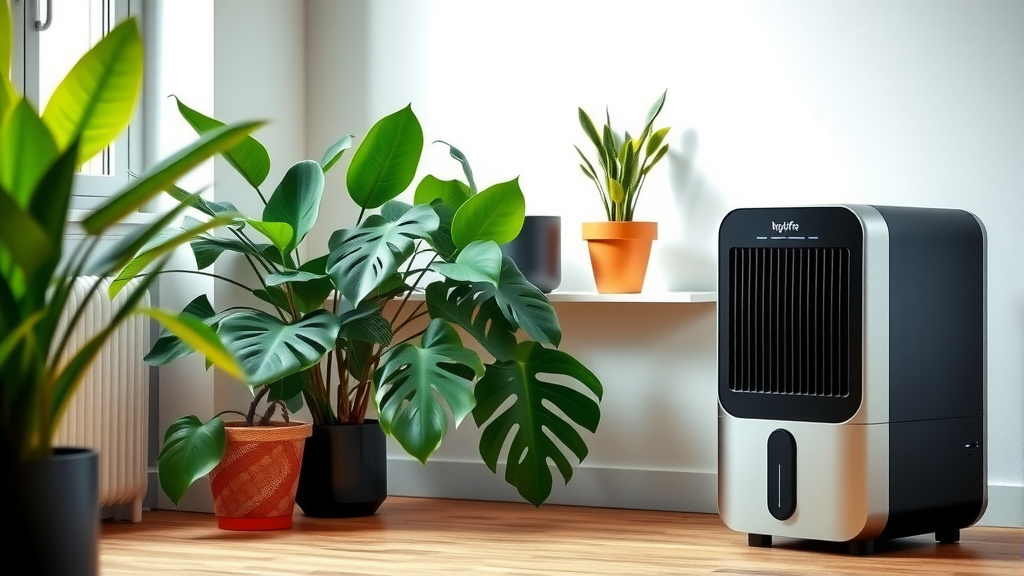
Does the Dyson Humidify+Cool Dehumidify?
No, the Dyson Humidify+Cool does not dehumidify. It adds moisture to the air and circulates it, so use a separate dehumidifier when you need to remove moisture.
On this page (6 sections)
- Does the Dyson Humidify+Cool dehumidify?
- What does the Dyson Humidify+Cool do with moisture?
- What should you use to lower indoor humidity?
- Can an air purifier or ozone generator dehumidify?
- How can you tell whether you need a humidifier or dehumidifier?
- Which Dyson Humidify+Cool moisture control answer matters most?
No, the Dyson Humidify+Cool does not dehumidify. It adds moisture to the air and circulates it, so use a separate dehumidifier when you need to remove moisture.
The name describes its two main jobs: humidifying and cooling through airflow. Those functions don't remove water vapor from a damp room.
Does the Dyson Humidify+Cool dehumidify?
No, the Dyson Humidify+Cool doesn't pull moisture out of the room. It humidifies the air and moves it, rather than collecting water in a tank or sending it through a drain.
A dehumidifier works differently. It removes moisture from indoor air and stores or drains the water it collects.
If you're comparing appliances, keep their roles separate: a humidifier adds moisture, a fan circulates air, and a dehumidifier removes moisture. Our guide to whether air purifiers and dehumidifiers are the same explains how those functions differ.
What does the Dyson Humidify+Cool do with moisture?
The Dyson Humidify+Cool adds moisture instead of reducing it. Its humidifying function is meant to raise humidity, while its fan moves air through the room.
That can suit a room where the air feels too dry. If the room already feels damp, adding moisture is the wrong direction.
Check the humidity with a meter if you're unsure which way it needs to move. Avoid running a humidifier and dehumidifier against each other, since one adds moisture while the other removes it.
Do Dyson fans dehumidify?
No, a Dyson fan doesn't dehumidify just by moving air. Airflow may change how warm or cool you feel, but it doesn't collect the water vapor in the room.
For more on the difference between airflow and moisture control, see whether Dyson fans dehumidify. If you use an air conditioner, its effect on humidity depends on its cooling and operating conditions; read whether AC humidifies or dehumidifies.
What should you use to lower indoor humidity?
Use a dehumidifier sized for the space and the amount of moisture you need to remove. For a closet or other small enclosed area, a rechargeable moisture absorber may suit the job; a damp basement or larger room needs a room-scale unit.
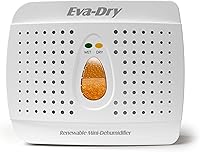
The Eva-Dry Wireless Mini Dehumidifier is a cordless silica gel absorber for small spaces such as closets, cabinets, cars, and boats. Its stated coverage is up to 333 cubic feet, and it absorbs up to 6 oz before recharging.
This mini unit isn't a substitute for a larger dehumidifier in a damp living area. Match the device to the space, and recharge it as directed.
For a larger home area, the AEOCKY 5500 Sq.Ft Energy Star Most Efficient is a compressor dehumidifier with a stated 80-pint daily capacity and 1.45-gallon tank. It includes a drain hose and garden hose adapter for water removal.
Check the unit's room conditions, placement, drainage setup, and operating instructions before using it. A stated coverage area alone doesn't tell you how quickly it will control humidity in your specific room.
Can an air purifier or ozone generator dehumidify?
An air purifier or ozone generator isn't a substitute for a dehumidifier. These devices address other air concerns, and don't remove water from a room simply by treating air or odors.
The Enerzen Ozone Generator is intended for odor treatment in unoccupied spaces. Its instructions say to remove people, pets, and plants during operation, then allow 30 minutes after ozone generation for airing out.
Don't use ozone generation as a way to control dampness. For related questions, see whether a dehumidifier reduces ozone and how a dehumidifier may affect air quality.
If you want one appliance to cover more than one air function, compare its stated capabilities carefully. Our guide to the best air purifier dehumidifier combo covers combination options.
How can you tell whether you need a humidifier or dehumidifier?
Use a humidity reading and the room's moisture symptoms to decide which direction to go. A humidifier adds moisture, while a dehumidifier removes it.
If the air is consistently damp or condensation appears, a dehumidifier may help address excess indoor moisture. Look for the source too, such as a leak or poor ventilation, since an appliance doesn't repair the underlying cause.
If the air is too dry, a humidifier may be the appropriate tool. Don't run the Dyson Humidify+Cool to solve high humidity, because its humidifying function adds moisture.
Which Dyson Humidify+Cool moisture control answer matters most?
Treat the Dyson Humidify+Cool as a humidifier and fan, not a dehumidifier. Choose it when you want to add moisture and circulate air; choose a separate dehumidifier when your goal is removing moisture.
For small enclosed spaces, the Eva-Dry is a cordless option to consider. For larger areas, consider a compressor unit such as the AEOCKY, and follow its setup and drainage instructions.
The Enerzen ozone generator addresses odor treatment in unoccupied spaces, not humidity. Keep the functions distinct when choosing equipment for your room.
Frequently asked questions
Does the Dyson Humidify+Cool remove moisture from a room?
No. The Dyson Humidify+Cool adds water vapor to the air and circulates air; it does not collect or drain room moisture like a dehumidifier.
If indoor humidity is too high, use a dehumidifier suited to the room and follow its instructions for drainage and humidity settings.
Can I use a Dyson Humidify+Cool and a dehumidifier together?
Yes, but their functions work against each other if they run at the same time: the Dyson adds moisture while the dehumidifier removes it. Use the humidifier only when the air is too dry, and use the dehumidifier when humidity is too high.
Do Dyson fans dehumidify?
A fan moves air but does not remove water vapor from it. Dyson fan models may have different features, but airflow alone won't lower the amount of moisture in a room; use a dehumidifier for that job.
Is an air purifier the same as a dehumidifier?
No. An air purifier targets airborne particles or odors, depending on its design, while a dehumidifier removes moisture from indoor air.
Some devices combine functions, so check which specific functions a model provides before relying on it for humidity control.