
How Much Current Does a Dehumidifier Draw?
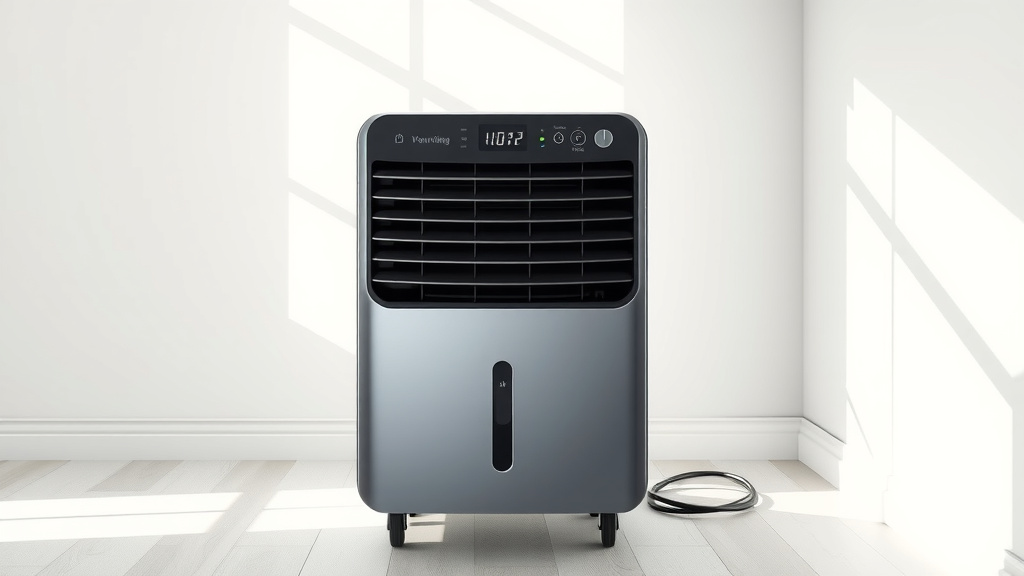
A typical residential dehumidifier usually draws between 3 to 8 amps of current, primarily depending on its size and efficiency. This range translates to around 300 to 800 watts of power at 120 volts.
Understanding your dehumidifier’s current draw helps you manage electricity costs and ensures your electrical circuits are safe. Larger units or older models often require more power, while Energy Star rated appliances are designed to be more efficient.
Here’s a quick summary of what you’ll find:
- Dehumidifiers use 3 to 8 amps on average.
- Factors like unit size, efficiency, and run time change electricity use.
- Always check your unit’s label for exact specs.
- You can lower energy costs with proper maintenance and settings.
- A high current draw can sometimes signal a problem with the unit.
How Much Current Does a Dehumidifier Draw?
Your dehumidifier’s current draw tells you how much electricity it pulls from your home’s circuit. Most standard residential dehumidifiers, the kind you might use in a basement, typically draw between 3 and 8 amps. This figure can vary quite a bit.
Understanding Amps and Watts
When we talk about current, we often mean amps. Amps measure the rate of electrical flow. Watts, on the other hand, represent the total power consumed. You can think of amps like the speed of water flowing through a pipe, and watts as the actual work that water can do.
What Influences Dehumidifier Current?
Several things affect how much current your dehumidifier draws. It’s not a one-size-fits-all answer. We found that the unit’s capacity, its energy efficiency rating, and even how often it runs all play a role in its electricity usage.
Dehumidifier Size Matters
Larger dehumidifiers, those designed to remove more pints of moisture per day, will generally draw more current. A small 30-pint unit needs less power than a big 70-pint model. It’s like comparing a compact car to a large SUV; both get you around, but one uses more fuel.
Energy Star Rating: Your Friend
An Energy Star certified dehumidifier is designed to operate more efficiently. This means it removes the same amount of moisture using less energy. You’ll often see a lower amp draw for these models compared to their non-certified counterparts (Energy Star program guidelines).
Operating Conditions Play a Role
The conditions in your home also affect current draw. If your basement is extremely humid, the dehumidifier will work harder. This intense operation can temporarily increase its current draw. It’s like pushing your car uphill; it uses more gas.
Is Your Dehumidifier Running Continuously?
A dehumidifier running non-stop will use more electricity than one that cycles on and off. Most units have a humidistat that lets them shut off once the desired humidity is reached. This cycling helps to save a lot of energy over time.
Typical Current Draw Ranges
To give you a clearer picture, here’s a general breakdown. Remember, these are averages, and your specific unit might vary. Always check the manufacturer’s label for exact specifications.
| Dehumidifier Capacity (Pints/Day) | Typical Amperage (Amps @ 120V) | Typical Wattage (Watts) |
|---|---|---|
| Small (20-30 Pints) | 2.5 – 4.5 Amps | 300 – 540 Watts |
| Medium (40-50 Pints) | 4.0 – 6.0 Amps | 480 – 720 Watts |
| Large (60-70 Pints) | 5.0 – 8.0 Amps | 600 – 960 Watts |
Residential Units (Small to Large)
Most homes use units in the 20-70 pint range. As you can see, the current draw goes up with capacity. A bigger unit can tackle a larger space or higher moisture levels more effectively.
Commercial Dehumidifiers (Higher Demand)
Commercial or industrial dehumidifiers are a different beast entirely. These powerful machines can draw 10 amps or much more. They are designed for large-scale operations and have significantly higher energy needs.
Calculating Your Dehumidifier’s Power Use
Want to know exactly what your unit is drawing? You can calculate it. This will give you a good idea of its electrical demands and how it might impact your power bill. It’s simpler than you might think.
Finding the Nameplate Information
Every appliance has a label, often on the back or side. This nameplate lists important electrical information. Look for the “Amps” (A) or “Watts” (W) rating. It’s usually a small sticker or engraved plate.
A Simple Formula: Amps x Volts = Watts
If your label only shows amps, you can estimate watts. For most North American homes, standard outlets are 120 volts. So, if your dehumidifier draws 5 amps, it’s roughly 5 amps x 120 volts = 600 watts. This helps you grasp the total power consumption.
Saving Energy and Reducing Current Draw
Reducing current draw helps both your electricity bill and the environment. There are some straightforward steps you can take to make your dehumidifier run more efficiently. We found these methods to be quite effective.
Maintain Your Dehumidifier
A clean dehumidifier runs better. Regularly clean or replace the air filter. A clogged filter makes the unit work harder, increasing current draw. This simple task can make a big difference in efficiency.
Set the Right Humidity Level
Most experts say that maintaining indoor humidity between 30% and 50% is ideal (CDC). Setting your humidistat higher than needed means the unit will run less. This reduces overall current usage and saves electricity.
Smart Placement Helps
Place your dehumidifier in a central location in the room, away from walls. Make sure air can circulate freely around it. Blocking the vents makes the unit less effective and can increase its power demands.
Consider a Smart Dehumidifier
Newer smart dehumidifiers can connect to apps or integrate with smart home systems. Some offer features like automatic shut-off when a certain humidity is reached or remote control. These features can help optimize operation and save energy.
When to Worry About Current Draw
Most of the time, your dehumidifier’s current draw is normal. But sometimes, unusual behavior can signal a problem. Here’s a quick checklist of things to watch for:
- If your circuit breaker trips often when the dehumidifier runs.
- If the unit feels excessively hot to the touch.
- If you notice burning smells or unusual noises.
- If the power cord looks damaged or frayed.
- If the unit is old and has never been serviced.
Conclusion
Understanding how much current your dehumidifier draws is key to smart home management. Knowing its amperage helps you manage electricity costs and ensures your electrical system is not overloaded. Most residential units pull 3 to 8 amps, but always check your specific model’s label for precision. Regular maintenance and proper settings can significantly improve efficiency, helping you maintain a comfortable, healthy home without shocking your wallet. Keep these tips in mind, and you’ll be well on your way to optimized humidity control.
How do I check the current draw of my specific dehumidifier?
You can find the exact current draw, usually listed in amps, on the manufacturer’s label or nameplate. This label is typically located on the back, side, or bottom of the unit. If you can’t find it, check your owner’s manual.
Does current draw impact my electricity bill directly?
Yes, absolutely. The higher the current draw (and wattage), and the longer your dehumidifier runs, the more electricity it consumes. This directly translates to higher numbers on your monthly electricity bill. Choosing an Energy Star model can help reduce this impact.
Can a dehumidifier draw too much current and cause problems?
Yes, if a dehumidifier draws too much current, it can overload a circuit, causing the circuit breaker to trip. This might happen if the unit is faulty, if you have too many appliances on one circuit, or if the unit is simply too powerful for the circuit it’s plugged into. Always ensure you’re using a dedicated circuit for large appliances when possible.
Is there a difference in current draw between compressor and desiccant dehumidifiers?
Yes, generally, there is. Compressor dehumidifiers typically have a higher current draw as they use a refrigeration cycle. Desiccant dehumidifiers, while effective in colder temperatures, tend to have a lower current draw because they use a rotating wheel and internal heater instead of a compressor, though they still consume power.
What’s a good way to monitor my dehumidifier’s energy usage?
You can use an inexpensive plug-in energy monitor (sometimes called a Kill-A-Watt meter) that plugs into the wall socket before your dehumidifier. This device will show you the real-time wattage and cumulative kilowatt-hours used, giving you a clear picture of its energy consumption.
