How to Choose a 30-Inch Whole House Fan
A 30-inch whole house attic fan is often a size class, not a true 30-inch blade: you should size it by the ceiling opening, the CFM it moves, and your attic vent area. A fan rated near 4,415 CFM can suit homes up to about 2,208 sq ft, while a 1,050 CFM gable unit suits lighter attic-only duty up to about 1,500 sq ft.
On this page (10 sections)
- Should you buy a 30-inch whole house fan or an attic fan?
- What does 30 inch mean on these fans?
- How do you measure the ceiling opening?
- How much CFM do you need for your home size?
- Why does attic vent area matter so much?
- What drive options should you look for?
- Which controls are worth paying for?
- How do you compare gable, wall, and ceiling fans?
- How do shutters, dampers, and grilles affect daily use?
- How do you install and care for a 30-inch fan safely?
A whole house attic fan 30 inch usually means a ceiling-mounted unit in the 30-inch class, chosen for its opening size and airflow. The right choice depends on whether you want to cool the whole home or just exhaust the attic.
You should not shop by diameter alone. A 30-inch class ceiling fan can move more than 4,000 CFM, while a 14-inch gable fan moves 1,050 CFM.
Those are different jobs.
This guide explains opening dimensions, airflow, venting, drive options, and controls. It also shows where three common product types fit, so you can match the fan to the task.
Should you buy a 30-inch whole house fan or an attic fan?
A whole house fan cools living spaces by pulling air through windows and exhausting it through the attic. An attic fan mainly removes hot air from the attic and does not pull much air from the rooms below.
That difference decides everything else. A ceiling-mounted whole house fan needs a grille in the ceiling, a damper box, and enough attic venting to push air out.
A gable or wall exhaust fan needs a framed opening in an exterior wall and a path for outside air to enter the attic.
If you are unsure which job you need, start with our whole house fan vs attic fan comparison. It explains the airflow path in plain terms and helps you pick the right type before you measure anything.
Pick the airflow path first
For whole house cooling, air should enter through open windows, cross the living space, pass through the ceiling grille, and leave through attic vents. For attic-only exhaust, air should enter through soffit or other low attic vents and leave through the gable or wall fan.
A fan that is perfect for one path can be wrong for the other. A gable fan will not cool bedrooms just because it moves attic air.
A ceiling whole house fan will not fix a poorly vented attic if the exhaust vents are too small.
Rule: choose the airflow path first, then choose the fan size. That order prevents the most common mistake, which is buying CFM for the wrong job.
What does 30 inch mean on these fans?
A 30-inch label points to the size class, not always to a 30-inch blade. Some models use the number for the ceiling cut-out, grille, or retail category.
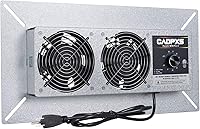
The QuietCool QC CL-4700 RF is a good example. It uses a 14 by 30 inch ceiling cut-out for the air intake grille.
The fan itself is rated at 4,415 CFM on high and 3,402 CFM on low. The 30 refers to the long side of the opening, not to a giant blade.
Other fans in this guide are smaller. The Air Vent gable unit has a 14-inch blade and moves 1,050 CFM.
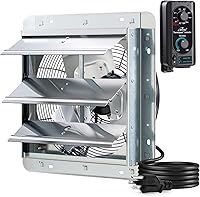
The VEVOR wall unit has a 16-inch blade and moves 2,438 CFM in its title rating. Neither is a 30-inch ceiling whole house fan, yet both show up in searches for attic ventilation.
Rule: trust the cut-out, grille, blade, and CFM specs together. The inch label alone never tells you whether the fan fits your ceiling or moves enough air.
How do you measure the ceiling opening?
Measure the opening you want to cut, the joist spacing, and the direction of the joists. A ceiling fan must fit between joists or require framing changes.
For the QuietCool model, the ceiling cut-out is 14 by 30 inches. It fits 16 or 24 inch on-center framing.
The motor head hangs from attic rafters, which saves space in the attic and avoids a large floor-mounted pedestal.
Measure twice before you order. Mark the grille outline on the ceiling, find the joists with a stud finder or small probe holes, and confirm that the long side of the cut-out runs parallel to the joists if the maker requires that layout.
Also check attic headroom. The motor hangs from rafters, so you need clear space above the grille.
Keep ducts, wiring, and storage clear of the damper box and the fan head.
Rule: the opening must fit your joists without unsafe cutting. If the cut-out crosses joists in a way the maker does not allow, pick another location or another model.
How much CFM do you need for your home size?
CFM means cubic feet per minute, the volume of air the fan moves each minute. More CFM is not always better.
It must match your home size, climate, and attic vent area.
The QuietCool QC CL-4700 RF moves 4,415 CFM on high and 3,402 CFM on low. QuietCool rates it for homes up to about 2,208 sq ft.
That rating assumes normal ceiling heights, open windows, and enough attic venting.
The Air Vent gable unit moves 1,050 CFM and is rated for up to 1,500 sq ft as an attic ventilator. That is a very different scale.
It exhausts attic heat at a modest rate and is not designed to pull a strong breeze through living rooms.
The VEVOR wall unit is listed at 2,438 CFM in its title, with a 16-inch blade, 77W AC motor, and 1,500 r/min. It sits between those two in airflow, but it is a wall exhaust fan, not a ceiling whole house fan.
Rule: match CFM to rated home area and vent area, not to the biggest number. Oversizing can waste energy and pull air harder than your vents can replace.
Undersizing can leave the attic hot and the house still.
Why does attic vent area matter so much?
A fan can only exhaust as much air as the attic can let in. If attic vents are too small, the fan starves, airflow drops, and the attic can go negative in pressure.
The QuietCool model requires 5.89 sq ft of net free attic venting. Net free area means the open area after screens, louvers, and baffles are counted.
A vent that looks large from outside can have much less net free area once the screen and louver blades are in the way.
This is the spec buyers miss most often. They read the CFM rating, then discover the attic has only a few small gable vents.
The fan still runs, but it cannot move its rated air.
Check soffit vents, ridge vents, and gable vents together. Air should enter low and leave high or leave through a powered exhaust that is sized to the total opening.
Baffles at the soffit keep insulation from blocking the inlet path.
How to check net free area in practice
Start by listing every vent that can supply the attic while the fan runs. Count soffit vents, ridge vents, and any gable vents that are not blocked by insulation or storage.
Write down the gross size printed on the vent or measured across the opening before you apply any reduction.
Then reduce that gross size to net free area. Screens, louver blades, and baffles each remove part of the opening, and the maker of the vent should state the net figure or the percentage that remains open.
If no net figure is listed, treat the gross size as unproven and do not assume it will support a high CFM fan.
Add the net figures together and compare the total with the fan requirement. The QuietCool QC CL-4700 RF requires 5.89 sq ft of net free attic venting at its rated airflow.
A total below that figure means the fan cannot reach its rating in real use, even if the nameplate CFM looks strong on paper.
Check the path as well as the total. A large ridge vent helps only if low inlets can feed it, and wide soffit vents help only if baffles keep insulation from closing them.
Blocked inlets, compressed insulation, and sealed eaves all shrink the effective area after installation.
If the total is short, you have two honest options. Add vent area in a way that suits the roof and weather exposure, or choose a fan with lower CFM that the existing vents can support.
Do not run a 4,415 CFM fan on a vent system built for a much smaller load.
Rule: never install a high-CFM fan until net free vent area supports it. If vent area is short, add vents or choose a lower-CFM fan.
CFM without vent area is just noise and strain.
What drive options should you look for?
Drive options include PSC motors, AC motors, and the controls that drive them. The motor type affects power use, speed choices, and how the fan behaves on low.
The QuietCool unit uses a PSC motor at 551 watts on high and 415 watts on low. It has two speeds.
PSC motors are common in whole house fans because they are steady, simple, and work well with speed controls.
The Air Vent gable unit is listed at 1/12 HP, 180W, and 3.2 amps, with button control. It is a simpler attic exhaust setup with a 14-inch blade.
That lower power reflects its lower CFM and narrower job.
The VEVOR wall unit uses a 77W AC motor at 1,500 r/min. Its note says a speed controller and power plug are not included and must be bought separately.
That matters if you want variable speed rather than full-speed operation.
If your home has small rooms, such as a bathroom, sizing there works differently. Our guide to what size bathroom fan shows how CFM scales down for a single room.
That logic does not apply to a whole house fan, which must move air for many rooms at once.
Rule: pick a drive and speed range that match the job. Whole house cooling needs at least two speeds.
Attic-only exhaust can be simpler, but check whether controls are included.
Which controls are worth paying for?
Controls decide how easy the fan is to use every day. A remote, timer, and two speeds are more useful than a fancy display that adds no function.
The QuietCool model includes a wireless RF control kit with a glass wireless switch and a countdown timer up to 12 hours. You can start the fan from the living space without a pull chain in the attic.
That matters because the fan head sits in the attic.
The Air Vent unit uses button control. The VEVOR unit uses touch or button control in its spec list, but the note about a separate speed controller is a warning.
Read what is in the box before you assume you can set speeds.
Timers help on warm nights. You can run the fan for a set period, then let it stop after the house reaches a comfortable temperature.
A timer also keeps you from leaving windows open and the fan running all night by accident.
Window locks are also part of the QuietCool package. QuietCool includes window locks to help keep windows secure while the fan runs.
That is a small detail with real daily value.
Rule: require remote control and a timer for a ceiling whole house fan. You should not need attic access for routine on and off use.
How do you compare gable, wall, and ceiling fans?
These three types mount in different places and solve different problems. Compare them by airflow path, not by looks.
A gable fan mounts in the gable end of the attic. The Air Vent unit is gable mount, stainless steel, 19 by 19 by 8 inches, with a 14-inch plastic blade.
It exhausts attic air through the gable and is rated for up to 1,500 sq ft.
A wall fan mounts in an exterior wall. The VEVOR unit is wall mount, 18.9 by 18.9 by 8 inches, 11.8 pounds, with a steel housing and automatic shutters.
The shutters open when powered and close when off, which helps block rain and debris.
A ceiling whole house fan mounts in the ceiling below the attic. The QuietCool unit brings room air up through a grille, through a damper box, and out the attic vents.
It cools people in the rooms, not just the attic.
Our roundup of best whole house attic fans for homes groups ceiling models by home size and CFM. Use it after you decide the type, then narrow by opening size and vent area.
If humidity is also a problem, ventilation alone may not be enough. A best dehumidifier for whole house can help in damp climates, while a whole house dehumidifier explains the difference between portable and ducted units.
Rule: choose the mount that matches the airflow path you need. Ceiling for whole house cooling, gable or wall for attic exhaust.
How do shutters, dampers, and grilles affect daily use?
Shutters, dampers, and grilles control air when the fan is off. They also affect noise, weather protection, and heat loss in winter.
The VEVOR wall fan has automatic shutters. They open when the fan runs and close when it stops.
That helps block rain and small debris when the fan is off. A shutter that sticks, however, can cut airflow fast.
The QuietCool damper box uses R5 insulated damper doors. The dampers close when the fan is off and help insulate the home from the attic in cold seasons.
The grille is removable for cleaning and access.
After any ceiling fan install, read our guide on how to insulate attic fan openings. A large ceiling hole can leak heated air in winter if the damper and surrounding insulation are poor.
Grilles also change how the fan feels in the room. A wide, flush grille spreads intake air and hides the opening.
A small or high-resistance grille can add noise and reduce airflow. The removable grille on the QuietCool model helps with cleaning dust and lint.
Rule: treat dampers, shutters, and grilles as part of the fan, not as extras. A fan with poor closure will hurt comfort in winter even if its CFM looks strong.
How do you install and care for a 30-inch fan safely?
Installation starts with power, framing, and attic access. A ceiling whole house fan needs a safe electrical run, a level mount, and room for the motor head and damper box.
The QuietCool spec lists a 20 ft power cord in the included components, along with the fan unit, acoustical ducting, R5 damper box, ceiling grille, wireless RF control kit, glass wireless switch, and window locks. That list tells you what should be in the box before you start cutting.
The maker describes a typical install time of 1 to 2 hours, with no framing or joist cutting required for the stated fit. That time assumes the joist spacing, access, and electrical supply already suit the model.
It does not remove the need to check vent area or attic headroom.
Care is simple but not optional. Remove the grille and clean dust from it, check that damper doors move freely, and confirm that acoustical ducting and the damper box remain secure.
Check window locks and the remote timer function so the fan can be used without attic access.
For wall and gable fans, care focuses on shutters, fasteners, and weather sealing. Confirm that shutters open and close fully, that screws remain tight, and that the housing shows no damage from damp conditions or rain.
A fan that cannot open fully will not deliver its rated CFM.
Rule: install only where framing, power, venting, and access all suit the chosen model. If any one of those checks fails, fix it first or choose a different fan.
Frequently asked questions
What does 30 inch mean on a whole house fan?
It usually refers to the size class or ceiling opening, not a 30-inch blade in every model. Always check the cut-out size, grille size, joist fit, and CFM rating before you order, because two fans in the same class can move very different amounts of air.
How much CFM do I need for a 30 inch fan?
Match CFM to your home size and climate. A 4,415 CFM fan is rated for homes up to about 2,208 sq ft, while a 1,050 CFM fan is a lighter attic unit rated up to about 1,500 sq ft.
Your attic vent area must support the CFM you choose.
Do I need a whole house fan or an attic fan?
Choose a whole house fan if you want to pull air through open windows and cool living spaces. Choose an attic fan if you mainly want to exhaust hot attic air.
Many homes use both, which is why this guide separates ceiling-mounted whole house units from gable and wall exhaust fans.
Can a 30 inch fan fit between 16 inch joists?
Some ceiling-mounted units fit 16 or 24 inch on-center framing without cutting joists. The QuietCool model here fits 16 or 24 on-center framing and uses a 14 by 30 inch ceiling cut-out.
Measure your joist spacing and ceiling opening before you buy.