Do I Need a Dehumidifier for a RV?
On this page (6 sections)
Yes, you likely need a dehumidifier for an RV, especially if you want to avoid mold, mildew, and moisture damage. Excess humidity can cause big problems in a small space like your recreational vehicle.
Even if you live in a dry climate, cooking, showering, and breathing all add moisture to the air. We found that controlling humidity is key for a comfortable and healthy RV environment. It helps protect your RV’s structure and your belongings.
- RV humidity creates mold.
- Cooking, breathing, and showering add moisture.
- Dehumidifiers protect your RV’s interior.
- They keep the air feeling better.
Let’s walk through everything you need to know about why a dehumidifier is a smart addition to your RV. Our guide to the best dehumidifier for your RV can help you choose the right model for your needs.
Why an RV Dehumidifier is a Smart Investment
An RV is a cozy home on wheels, but its small, sealed environment is a perfect breeding ground for moisture problems. You absolutely need a dehumidifier to protect your rig and your health.
Think about it. Your RV is usually much smaller than a house. Every breath you take, every shower you enjoy, and every meal you cook adds water vapor to that limited air space. Without a way to remove it, humidity quickly builds up.
The Hidden Dangers of Excess RV Humidity
High humidity isn’t just uncomfortable; it’s genuinely damaging. We found that the consequences can range from minor annoyances to expensive repairs and even health risks.
Mold and Mildew Growth
This is probably the biggest concern. Mold and mildew love damp, dark places, and RVs have plenty of those. Once they start, they spread fast, leaving behind an unpleasant, musty smell.
More than just a smell, mold actively breaks down materials. It can eat away at fabrics, wood, and even your RV’s structural components. Plus, mold spores can trigger allergies and respiratory issues in sensitive individuals (Centers for Disease Control and Prevention).
Structural Damage to Your RV
Wood, a common material in RV construction, absorbs moisture. Over time, this absorption leads to swelling, warping, and eventually rot. We’ve seen how untreated moisture can cause floors to soft-spot or walls to delaminate.
Metal components, like screws and fasteners, can also corrode faster in a high-humidity environment. This compromises the integrity of your RV, potentially leading to costly repairs down the road.
Unpleasant Odors and Stale Air
Even without visible mold, high humidity creates a stale, heavy atmosphere. Your RV can start to smell damp and unpleasant. This isn’t the fresh, inviting space you want for your travels.
Moisture also encourages bacteria and dust mites, contributing to poorer air quality. A dehumidifier helps keep the air feeling lighter and smelling much better.
Damage to Your Belongings
Your clothes, books, and other personal items are not immune. Fabrics can develop mildew spots, paper can warp and become brittle, and electronics can suffer from moisture exposure. Protecting your gear means controlling the humidity around it.
Sources of Moisture Inside Your RV
It’s surprising how much moisture we generate just by living! Understanding these sources helps you appreciate why a dehumidifier is so necessary.
- Breathing: Every exhale releases water vapor. With multiple people, this adds up quickly.
- Showering: Hot showers fill the air with steam. Even with a vent fan, much of that moisture stays inside.
- Cooking: Boiling water, simmering stews, and even making coffee all release steam into the air.
- Drying Clothes: If you hang wet clothes inside, all that water evaporates into your RV.
- Pets: Even our furry friends contribute a small amount of moisture.
- Rain and Snow: Tracking in wet shoes or clothes, or even small leaks, brings in outside moisture.
- Ground Evaporation: In some conditions, moisture from the ground can seep into your RV from below.
Choosing the Right Dehumidifier for Your RV
Not all dehumidifiers are created equal, especially for the unique environment of an RV. You’ll want to pick one that fits your space and needs.
Types of Dehumidifiers for RV Use
You generally have two main types to consider: compressor dehumidifiers and desiccant dehumidifiers. Each has its pros and cons.
Compressor Dehumidifiers
These are what most people picture. They work like a mini refrigerator, drawing in air over cold coils to condense water vapor into liquid. They are generally more effective in warmer, more humid climates.
They can be a bit noisy and less efficient in colder temperatures (below 60°F or 15°C). If you primarily camp in hot, muggy areas, a compressor unit might be a good fit.
Desiccant Dehumidifiers
Desiccant units use a special material that absorbs moisture from the air, much like those little silica gel packets. They are very effective in cooler temperatures and tend to be quieter.
They often use more electricity than compressor models at higher temperatures. If you RV in cooler weather or live in your RV year-round, a desiccant model could be your best bet.
Key Features to Look for in an RV Dehumidifier
When you’re shopping, keep these important features in mind to ensure you get the best unit for your RV.
- Size and Portability: RVs are small! You need a compact, lightweight unit that’s easy to move and store.
- Drainage Options: Look for a unit with a removable water tank and, ideally, a continuous drain option. This means you can attach a hose to drain water directly, saving you from emptying the tank daily.
- Auto Shut-Off: A must-have feature. The unit should turn off automatically when the water tank is full to prevent overflows.
- Adjustable Humidistat: This allows you to set your desired humidity level (e.g., 50-55%). The unit will cycle on and off to maintain that level, saving energy.
- Low Temperature Operation: If you camp in cold weather, ensure the unit is rated to work efficiently at those temperatures. Some models have defrost features.
- Noise Level: Since your RV is a small space, a quiet unit will make your experience much more pleasant. Check decibel ratings if available.
Here’s a quick comparison to help you decide:
| Feature | Compressor Dehumidifier | Desiccant Dehumidifier |
|---|---|---|
| Best For | Warm, humid climates (above 60°F) | Cooler climates (below 60°F), year-round use |
| Noise Level | Can be louder | Generally quieter |
| Energy Use | More efficient in warm temps | More efficient in cool temps |
| Weight/Size | Varies, often heavier | Often lighter and more compact |
| Cost | Mid-range to high | Often higher |
Setting Up and Maintaining Your RV Dehumidifier
Getting your dehumidifier running efficiently in your RV is pretty straightforward. A little care goes a long way in ensuring it works well for years.
Placement Tips for Optimal Performance
Where you put your dehumidifier makes a difference. You want it to be able to circulate air effectively.
Place your unit in a central location if possible, away from walls or furniture that might block airflow. Keep doors to cabinets or closets open if you want to dehumidify those spaces too. Try to elevate it slightly off the floor for better circulation.
Routine Maintenance Checklist
To keep your dehumidifier running smoothly and effectively, follow these simple steps:
- Empty the water tank regularly: Daily, or as needed, if you don’t have a continuous drain.
- Clean the air filter: Check and clean the filter every 2-4 weeks, or more often if your RV is dusty. For detailed instructions on how to clean a dehumidifier, consult our comprehensive guide.
- Wipe down the unit: Keep the exterior clean, especially around air vents.
- Check for ice buildup: If you use a compressor unit in cooler temps, ice can form. Defrost if needed.
- Store properly: When not in use for extended periods, drain it completely and store it in a dry place.
When to Use Your RV Dehumidifier
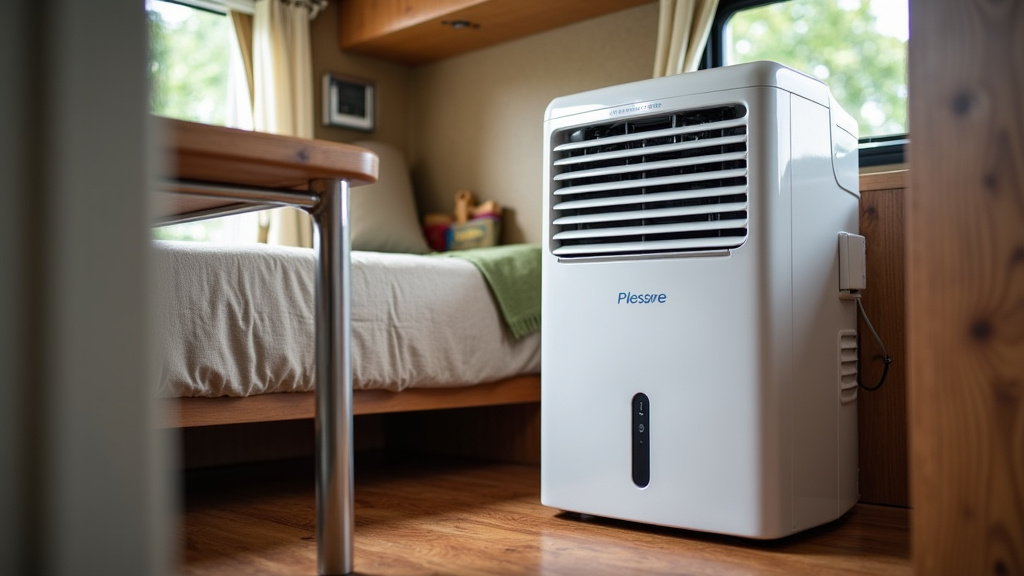
You don’t need to run your dehumidifier 24/7, but knowing when to turn it on can save you hassle.
Run it whenever the relative humidity inside your RV is above 50-55%. Many units have a built-in humidistat that will automatically maintain this level. You’ll likely need it more during humid weather, after showers, or when cooking.
Even in dry climates, if you’re closed up in your RV, internal moisture can build. It’s always a good idea to monitor the humidity with a separate hygrometer, especially if your unit doesn’t have a display.
Conclusion
Protecting your RV from excess moisture is essential for its longevity and your comfort. We found that a dehumidifier isn’t just a luxury; it’s a smart investment against mold, structural damage, and unpleasant odors. By understanding why moisture builds up and choosing the right unit for your RV, you can easily maintain a healthy environment.
Take control of your RV’s humidity today. Consider your camping habits and climate, then select a dehumidifier with features like continuous drainage and an adjustable humidistat. Your RV (and your health) will thank you.
Frequently Asked Questions
How can I tell if my RV has too much humidity?
You can often see signs like condensation on windows, a musty smell, or even visible mold growth. For a precise measurement, we recommend using a hygrometer. This small device will tell you the exact relative humidity inside your RV.
Can opening windows help reduce RV humidity?
Opening windows can help with air circulation, but it’s not always effective for reducing humidity, especially if the outside air is also humid. It’s best used in conjunction with a dehumidifier or to air out the RV on dry days. A dehumidifier actively removes moisture from the air.
What humidity level should I aim for in my RV?
We generally found that maintaining a relative humidity level between 45% and 55% is ideal. This range is low enough to prevent mold and mildew growth but not so dry that it becomes uncomfortable for you. Many dehumidifiers allow you to set this target.
Are there any natural ways to dehumidify an RV?
While not as effective as a mechanical dehumidifier, you can use moisture absorbers like desiccant packs or bowls of charcoal for very small, localized areas. These are temporary solutions and won’t address widespread humidity problems in your entire RV. They work best in small closets.
How much electricity does an RV dehumidifier use?
The electricity usage varies greatly depending on the type and size of the unit. Desiccant dehumidifiers generally use more power than compressor types, especially in warmer conditions. Check the wattage rating on the unit you’re considering to estimate its power draw.